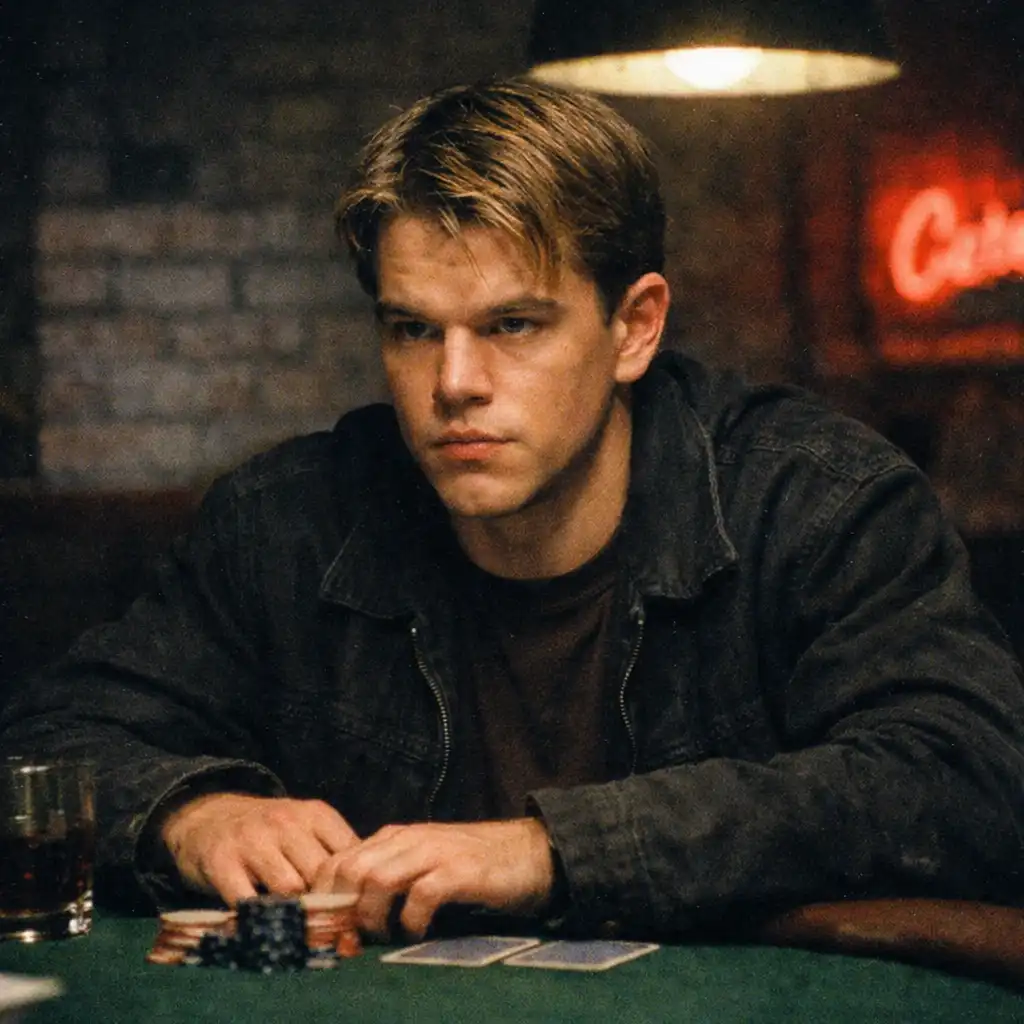
A dramatic close-up of a poker player's hands pushing a stack of chips into the centre of a green felt table under low, moody light

Poker Films

Poker Films: Where Every Hand Tells a Story

Poker films transform a card game into a crucible of character, where bluffing becomes a metaphor for identity and every chip carries the weight of consequence. The game's dramatic structure—ante, flop, turn, river—mirrors classic narrative arcs, while the genre itself spans from gritty underground dramas to glossy heist thrillers. Movie Briefing offers analysis, not gambling advice.

Thematic Analysis

Themes of Poker Cinema

Bluffing as Identity

In poker films, the bluff is a metaphor for the masks people wear in everyday life. Characters reveal their true selves through the lies they tell at the table. Films like The Cincinnati Kid use bluffing to explore pride and downfall, while modern films like Molly's Game show bluffing as a survival skill. The tension between authenticity and performance drives character arcs.

Luck vs. Skill

Poker films constantly debate whether success comes from mathematical precision or fate. This tension mirrors larger questions about control and destiny. Rounders emphasises skill and reading opponents, while Casino Royale uses poker as a battle of wits between Bond and Le Chiffre. The debate often resolves in a final hand that feels both earned and fated.

The Cost of Obsession

Poker films rarely end without a price paid—relationships, morality, or sanity. The game becomes a mirror for addiction and ambition. The Gambler (1974) is a stark portrait of compulsion, Mississippi Grind shows the slow erosion of hope, and even comedic takes like The Grand acknowledge the darker edge.

Curated List

Essential Poker Films

The Cincinnati Kid (1965)

Steve McQueen stars as a young poker player challenging the established king in a Depression-era New Orleans. Directed by Norman Jewison, the film is a study in cool confidence and crushing defeat, famous for its climactic five-card stud showdown and its exploration of pride and generational conflict.

Explore The Cincinnati Kid

Molly's Game (2017)

Aaron Sorkin's directorial debut tells the true story of Molly Bloom, who ran high-stakes underground poker games for celebrities and billionaires. Based on Bloom's memoir, the film features a commanding performance by Jessica Chastain and focuses on power dynamics and legal consequences.

Explore Molly's Game

Casino Royale (2006)

James Bond faces Le Chiffre in a high-stakes Texas Hold'em tournament that serves as the film's centrepiece, blending espionage with poker psychology. Directed by Martin Campbell, the film marked Daniel Craig's debut as Bond and features meticulously choreographed poker scenes.

Explore Casino Royale

Cultural History

Poker and Film: A Cultural History

Poker has been a cinematic staple since the silent era, evolving from a symbol of frontier lawlessness to a metaphor for modern risk culture. Early Westerns used poker to signify moral ambiguity, with saloon tables serving as arenas for honour and deceit. The 1970s brought gritty character studies like California Split (1974), which examined the psychology of gambling with documentary-like intimacy. The poker boom of the 2000s, driven by televised tournaments and online play, led to a wave of mainstream films that treated the game as both spectacle and intellectual contest.

Across these decades, the table has remained a place where social boundaries dissolve and true character emerges. Whether set in a dusty frontier town, a neon-lit casino, or a private underground club, poker scenes compress time and expose vulnerability. Directors return to the game because it offers a ready-made structure for suspense: every bet raises the stakes, every fold reveals a limit, and every showdown delivers a verdict.

In poker films, the table is never just a table—it's a stage where character is revealed one bet at a time.

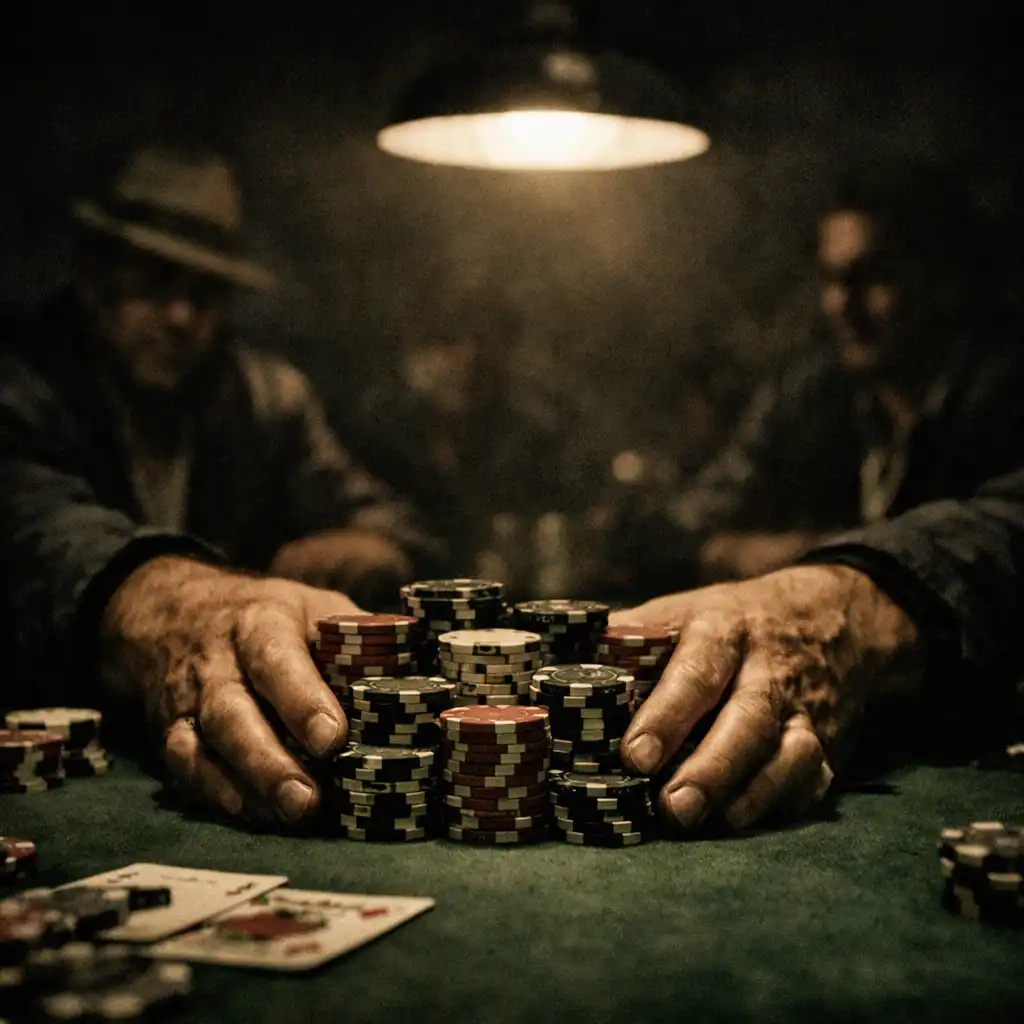
Behind the Scenes

Poker Film Facts

Rounders' Realism

The poker scenes in Rounders were choreographed with input from professional poker players, and the actors underwent training to handle chips and cards authentically. Matt Damon learned to shuffle chips like a pro, and the film's poker consultant was Johnny Chan, a World Series of Poker champion.

Casino Royale's Record Hand

The final poker hand in Casino Royale was one of the most expensive scenes ever filmed for a card game, with a custom-built set and multiple camera setups. The scene took three weeks to shoot, and the pot contained over $100 million in fictional chips.

The Cincinnati Kid's Ending

The original ending of The Cincinnati Kid was changed after test audiences reacted negatively; the final version is now considered one of the greatest poker climaxes in film history. The alternate ending had the protagonist win, but the change deepened the film's thematic impact.

Keep Reading

Explore More Poker Stories

Continue your exploration of poker cinema with our in-depth movie reviews, character profiles, and thematic articles.